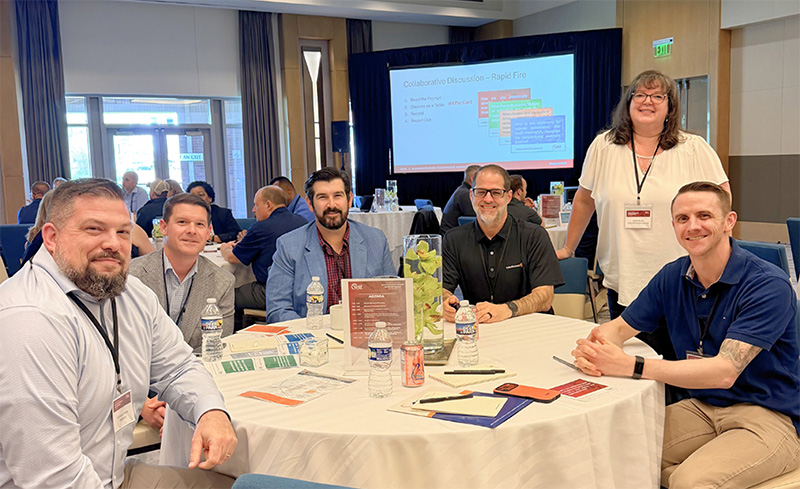
On April 15, 2026, manufacturing leaders from across Maryland gathered at The Hotel at Arundel Preserve in Hanover for the Maryland MEP Workforce Innovation Summit. The half-day event brought together manufacturers, HR professionals, workforce experts, and training partners for a focused conversation about one of the industry’s most persistent priorities: building and sustaining a stronger workforce.
From opening remarks through the final roundtable, the message was consistent: workforce challenges haven’t gone away. If anything, they’ve grown more complex and more connected to every part of business performance. But the summit also highlighted real momentum. Maryland manufacturers are sharing ideas, testing new approaches, and making longer-term investments in talent. Here’s what you need to know from each session:
People First, Strategy Second
The summit opened with an honest look at the current workforce landscape in Maryland manufacturing, realistic about the challenges, but clear that momentum exists for those willing to act on it.
Several themes shaped the rest of the day: workforce issues are evolving, not easing; support and resources are available, although sometimes underutilized; and stronger talent pipelines have to remain a top priority. But the most important point was also the simplest; manufacturing is still about people.
Every strategy discussed throughout the day came back to that foundation. The companies that keep employees, leaders, and future talent at the center of their decisions will be better positioned for long-term success.
AI in Hiring: Use It Wisely
Eric Dunleavy, Vice President of Employment & Litigation Services at DCI Consulting, led the first session with a practical primer on AI in HR. Rather than framing AI as a single tool or a straightforward solution, Dunleavy treated it as a fast-moving field that demands careful evaluation, strong governance, and consistent human oversight.
Recruiting, interviewing, and hiring are currently among the most common HR use cases for AI—and also among the highest risk. His most important reminder: “Traditional selection procedures are still the gold standard.” AI may offer speed and cost savings, but hiring systems still need to be job-related, defensible, and fair. Efficiency gains are not a substitute for validation.
Dunleavy drew an important distinction between enterprise-grade AI tools and consumer-grade platforms. They are not interchangeable, and treating them as such can create significant legal and operational exposure. He also emphasized that improvements in applicant quality or workforce diversity should never be assumed as outcomes of AI adoption.
For manufacturers exploring AI tools in HR, the actionable steps are:
- Inventory every AI tool currently in use across your organization
- Identify high-risk applications, particularly anything influencing employment decisions
- Build a governance team that includes both HR leadership and legal or compliance
- Conduct a proactive AI audit before problems surface
- Develop a validation plan confirming job relevance and performance
- Stay current on evolving federal and state regulations around AI in the workplace
The takeaway wasn’t to avoid AI. It was to approach it with the same discipline you’d apply to any high-stakes business decision. Manufacturers that use AI well will be those who understand how it works, why they’re using it, and where human judgment must stay in control.
Workforce Compliance: A Moving Target
Paul Burgin of Ogletree Deakins delivered the compliance session, offering an update on the legal and regulatory changes manufacturers need to track. His message was direct: compliance is not a static checklist. It requires active, ongoing attention—especially as new workforce technologies and shifting policy priorities continue to change the landscape at both the state and federal levels.
Several issues stood out as particularly timely for manufacturers:
- Overtime and FLSA developments that may affect how hourly and salaried employees are classified
- The federal reclassification of marijuana and the HR and workplace policy implications that follow
- AI use in the workplace—specifically the privacy risks that arise when employees use AI tools that may expose confidential company information
- Internal complaint handling and the legal exposure that comes with inconsistent or undocumented processes
One data point from the session reinforced how urgently this last point matters: 64% of manufacturers reportedly use AI in some form, with that number continuing to rise. As adoption increases, so does the need for clear internal policies, stronger oversight, and consistent documentation.
The broader message: workforce strategy and compliance strategy now overlap more than ever. Moving fast is important, but so is protecting both the business and the workforce by staying informed and prepared.
Recruiting and Retention: Culture Does the Work
The summit’s fourth session featured Jaime Andrews, Director of Human Resources at Platform Aerospace, and Margaret Welliver, HR Manager at Shelter Systems. Their conversation focused on what actually drives candidates to accept an offer, and what keeps employees from leaving once they’re in the door.
The central theme was culture and transparency. Andrews was direct about where this work starts: from the very first candidate conversation. “They want to know how their role contributes back to the growth of the company.” That’s a reasonable expectation, and manufacturers who can answer it clearly will have a meaningful advantage in a competitive labor market.
She also challenged the traditional view of HR’s role. “See HR as a strategist and business partner, and not just admin.” Turnover, onboarding, and pipeline development aren’t side issues; they’re core business issues. When HR has a seat at the strategy table, companies are better equipped to build the systems that support performance and retention over time.
Welliver added a point that sounds simple but is frequently overlooked: “Employees want feedback.” Visible leadership, consistent communication, and genuine responsiveness to what employees experience day-to-day are not soft perks. They’re retention tools.
On the recruiting side, the panel encouraged manufacturers to look beyond traditional talent pools:
- Students and recent graduates
- Career changers
- Veterans
- Second-chance hires
- Candidates from restaurant and hospitality backgrounds, who often bring the urgency and adaptability that manufacturing environments require
The panel also highlighted the value of apprenticeships, internships, and partnerships with local workforce organizations for building more durable, long-term pipelines. Andrews shared that Platform Aerospace has seen strong outcomes through Maryland MEP-supported programs, including full-time hires and a growing engineering pipeline.
One of the most actionable ideas from the session was the stay interview, a structured conversation with current employees designed to understand what’s working, what isn’t, and what would make them more likely to stay. Rather than waiting until someone hands in their notice, stay interviews give employers the chance to respond before disengagement becomes a departure.
Better Together
The summit closed with an open roundtable that gave attendees the chance to compare challenges and share what’s working. Topics ranged from Gen Z engagement and AI-assisted applications to childcare, transportation support, and the cultural shifts manufacturers are navigating as workforce expectations continue to evolve.
Two comments captured the spirit of the day well. One attendee noted, “With challenge comes opportunity. Let’s lean in and work with one another.” Another, Michael G. of Parker Plastics, put it plainly: “We come to these functions to find out what everyone else is doing and what’s working for them.”
That collaborative mindset is one of the summit’s most valuable outcomes. Maryland manufacturers are under real pressure, but they’re also learning from one another and building the kind of shared momentum that benefits the whole industry.
The Bottom Line
The 2026 Maryland Manufacturers Workforce Innovation Summit reinforced something the industry already knows but sometimes struggles to act on: the future of manufacturing depends on workforce strategy that is practical, proactive, and deeply human.
AI can support better decisions, but only with strong governance. Training works best when it’s tied to long-term growth, not short-term headcounts. Compliance is more complex than ever before. And culture, transparency, and consistent feedback are no longer nice-to-haves; they’re retention fundamentals.
Maryland manufacturers don’t have to solve these challenges alone. Maryland MEP continues to connect companies with the tools, training, and partnerships needed to strengthen the workforce statewide. If recruiting, retention, leadership development, or workforce planning is on your agenda, now is the time to stay engaged.
Get Involved with Maryland MEP
Join our email newsletter to remain informed about upcoming trainings, events, and initiatives. Stay tuned for more Maryland manufacturing accomplishments to champion.