Maryland is rapidly transforming its industrial base into a powerhouse of advanced technology. Facilities across the state are moving away from traditional methods to embrace a more connected, intelligent approach. At the center of this shift is smart factory automation, a movement that integrates physical machinery with advanced software.
Manufacturers use the Internet of Things (IoT), artificial intelligence (AI), and digital twin technology to overhaul how they build products. These tools allow companies to turn standard facilities into highly efficient environments.
What is Smart Factory Automation?
Smart factory automation represents a complete transformation of traditional industrial spaces through the integration of connected systems and intelligent machinery. Instead of relying on isolated machines that require constant human intervention, modern facilities utilize integrated networks that communicate effortlessly. These automation systems monitor equipment, adjust settings in real time, and alert operators to potential issues before a breakdown occurs.
By integrating digital technologies, businesses create a responsive ecosystem that adapts to changing demands. This proactive approach helps companies optimize production while minimizing costly downtime. Managers gain immediate visibility into factory operations, allowing them to make fast, accurate decisions that drive revenue.
The primary goal of this integration is simple: improve production across every department. When machines communicate effectively, companies drastically increase productivity and reduce raw material waste. This shift from reactive troubleshooting to proactive management forms the foundation of every successful modern manufacturing environment.
Maryland’s Manufacturing Landscape
The manufacturing sector in Maryland contributes significantly to the state’s economic health. Local businesses produce everything from aerospace components to advanced pharmaceuticals. To remain competitive on a global scale, Maryland leaders place a heavy emphasis on smart manufacturing initiatives.
State-sponsored grants and local technology partnerships actively support companies looking to upgrade their facilities. These resources make factory automation more accessible to mid-sized businesses that might otherwise struggle with high initial investment costs. Universities and research centers across Maryland also collaborate with industrial leaders to pilot new automation techniques and train the next generation of technicians.
This collaborative ecosystem encourages a culture of continuous improvement within the state. As businesses adopt modern frameworks, they build a more resilient and agile manufacturing operations model. Maryland’s commitment to industrial innovation ensures local companies can meet strict regulatory standards while expanding their output capabilities.
IoT in Maryland’s Smart Factories
The Internet of Things serves as the central nervous system for any smart factory. In Maryland, companies deploy thousands of IoT sensors across their factory floors to capture exact details about machine performance, temperature variations, and energy consumption. This interconnected web of devices feeds directly into centralized dashboards.
Access to real-time data completely changes how teams approach maintenance. Instead of following arbitrary service schedules, technicians rely on predictive maintenance alerts generated by IoT sensors. The system detects minute changes in motor vibration or heat output, flagging a machine for repair long before it actually fails.
Beyond individual machine health, IoT devices streamline the entire supply chain. Sensors track raw materials as they enter the loading dock and move through various assembly stages. This level of tracking eliminates bottlenecks, ensures materials are available exactly when needed, and drives massive improvements in overall production efficiency.
AI’s Role in Smart Factory Automation
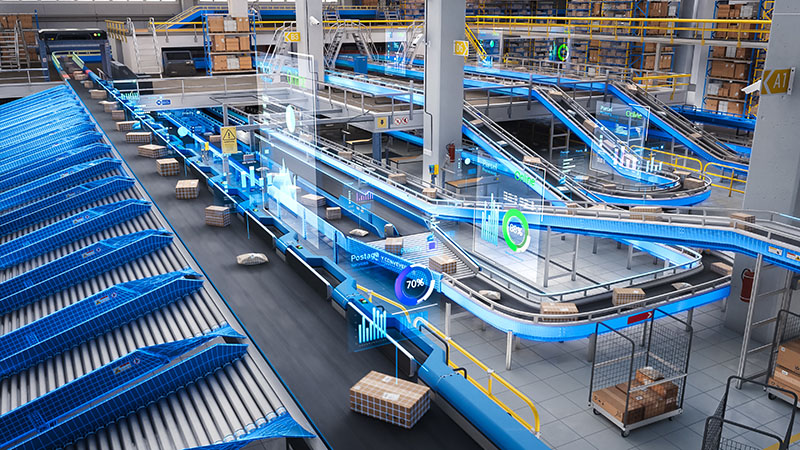
Artificial intelligence takes the massive volume of data generated by IoT sensors and turns it into actionable strategies. Maryland manufacturers deploy AI algorithms to analyze historical trends and optimize complex manufacturing processes. These intelligent systems can identify patterns that human operators might easily miss.
One of the most valuable applications for AI is automated quality control. High-speed cameras paired with machine learning software to inspect products moving down the assembly line. AI instantly identifies microscopic defects, removing faulty items from the line without slowing down the machinery. This guarantees that only top-tier products reach the consumer, protecting brand reputation and reducing return rates.
AI also plays a critical role in managing unpredictable market demands. Advanced forecasting tools analyze past sales data, economic indicators, and seasonal trends to predict future product requirements. Managers use these insights to adjust purchasing schedules and staffing levels, ensuring the facility runs at peak performance without overproducing.
Digital Twin Technologies in Practice
Digital twins are exact virtual replicas of physical assets, systems, or entire facilities. Maryland manufacturers build digital twins to map out their physical factory floors in a completely risk-free virtual space. This technology allows engineers to run complex simulations without ever disrupting actual daily operations.
By monitoring the digital replica alongside the physical equipment, operators gain a deeper understanding of equipment stress and workflow efficiency. If a company wants to introduce a new product line, they can simulate the entire assembly process using the digital twin. The software reveals potential space constraints, timing issues, or safety hazards before the company moves a single piece of heavy equipment.
This virtual prototyping significantly accelerates the research and development phase. Companies can test hundreds of different configurations to find the absolute most efficient layout. Implementing digital twins gives manufacturers the confidence to execute major facility upgrades, knowing the simulated results will accurately match real-world outcomes.
What to Know
The future of manufacturing belongs to companies that leverage data to make intelligent, proactive decisions. For businesses looking to scale their operations, investing in automation is no longer optional; it is a critical requirement for long-term survival. Begin assessing your current production lines today to identify where intelligent sensors and automation software can drive the highest immediate value for your business.
Get Involved with Maryland MEP
Find out more about the resources available to help small- and medium-sized manufacturers adopt these advanced technologies. Contact Us >