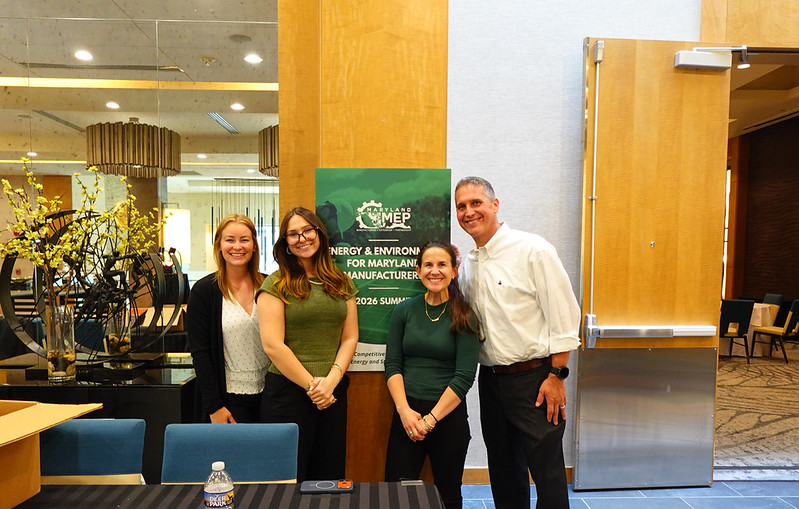
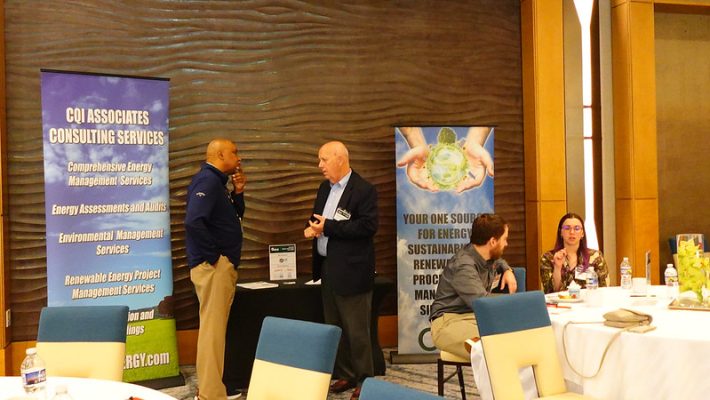
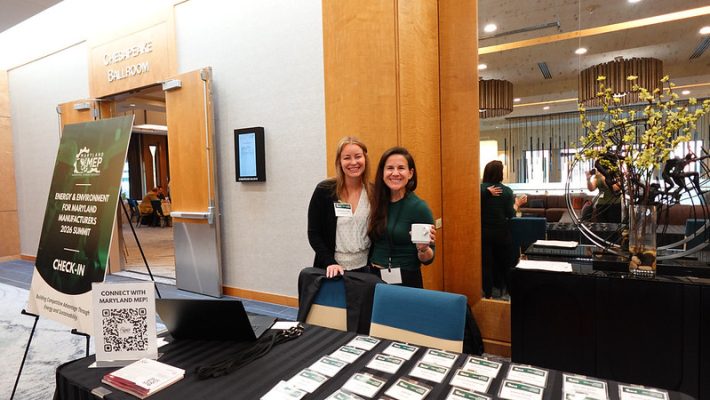
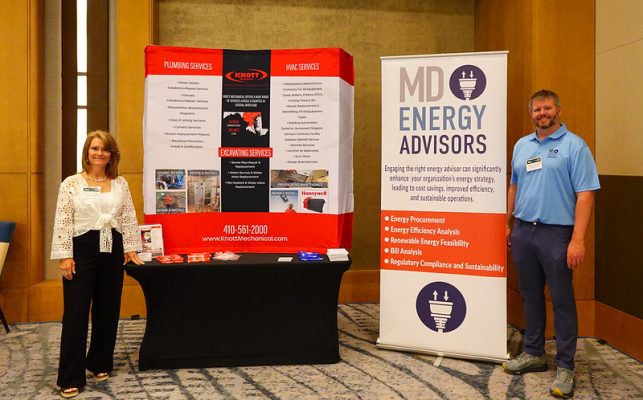
When Maryland manufacturers gather to talk energy, one message rings clear: sustainability and profitability are no longer competing goals; they are the same goal. That theme anchored the 2026 Maryland Manufacturing Energy Summit, held June 11, 2026, at The Hotel at Arundel Preserve in Hanover, Maryland.
Delivered by Maryland MEP, the half-day event brought together plant managers, sustainability leaders, and energy experts to share what works. The agenda spanned proven case studies, practical rebate guidance, networking, and a candid look at rising energy costs.
Setting the Tone
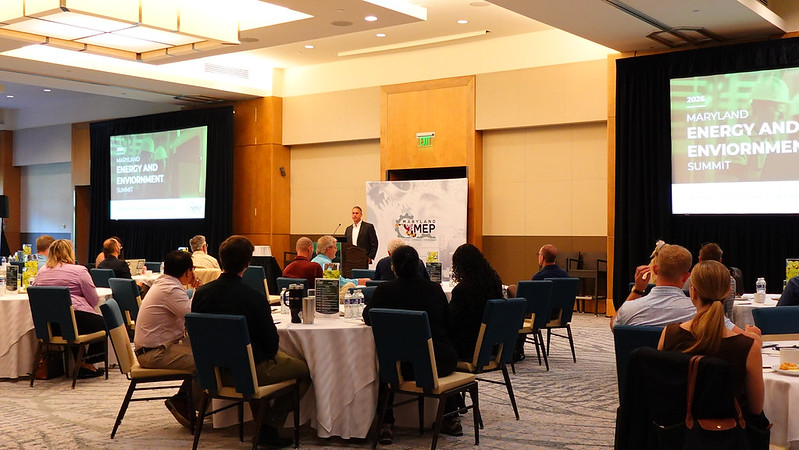
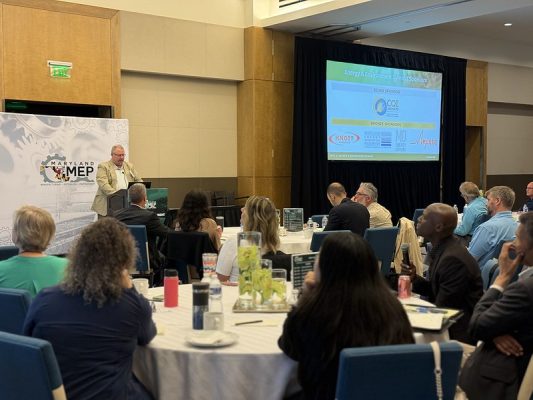
Mike Kelleher, CEO of Maryland MEP, opened the summit by reflecting on the event’s roots. Launched in 2023, the Maryland Manufacturing Energy Summit was built on a simple premise: manufacturers learn best from one another.
Kelleher reminded attendees that energy costs rank among the top three concerns he hears from Maryland manufacturers. He framed the day’s purpose plainly: “Learn something today to help advance our industry.” Eric Coffman, Division Director of Energy Programs at Maryland Energy Administration, followed, grounding the conversation in MEA’s core mission: delivering clean, reliable, and affordable energy across the state. Together, their remarks reinforced the summit’s central insight—efficiency is not a cost center. It is a competitive advantage.
Lessons from Volvo: A Four-Stage Path to Optimization
Mark Pannell, Environmental, Energy & Sustainability Manager at Volvo Group Trucks, delivered a masterclass in structured decarbonization. His site in Hagerstown is a 1.5 million square-foot powertrain facility producing Class 8 trucks for Volvo and Mack. The challenge: advance toward net zero without compromising output.
Pannell shared Volvo’s four-stage optimization framework:
- Stage 1 — Foundation: Data collection, sub-metering, management commitment, and clear target setting.
- Stage 2 — Application: A cross-functional core team pursuing low-cost wins through “Energy Scrap Hunts.”
- Stage 3 — Optimization: Project ranking, industrialization, and retro-commissioning.
- Stage 4 — Advanced Integration: Digitization, AI-assisted monitoring, renewables, and utility rebates—described as “the cherry on top.”
The Results Speak for Themselves
Volvo’s discipline has produced measurable outcomes:
- 62.2% reduction in energy intensity since the program began.
- ISO 14001 and ISO 50001 management systems fully in place.
- 45% of facility electricity sourced from regenerated energy via EDL test cells with regenerative dynamometers.
- A 37% peak demand reduction from two installed solar systems.
- A 14% cut in CO2 emissions from the 2019 baseline using renewable diesel (HVO100).
- $2.2 million in utility rebates captured since 2016—and counting, with five projects currently in progress.
One standout example: replacing the T300 with AMT G&S equipment allowed production to grow 14x while energy use rose only 7x.
The Reality of Implementation: A Manufacturer Panel
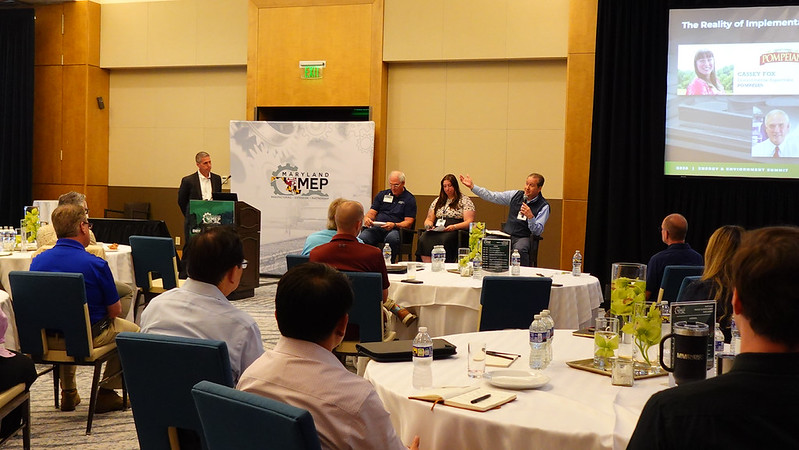
Theory is one thing. Execution is another. Three Maryland manufacturers shared the unfiltered reality of implementing energy initiatives:
- Parker Plastics completed LED lighting upgrades (50% incentive), a VFD project on air compressors (70% rebate), and in-house air consumption studies to reduce pressure during bottle shaping.
- Sea Watch International upgraded boilers for its clam-shucking heat process, completed an e2m2 audit, and conducted MEP audits as equipment reached end of life.
- Pompeian, operating in a facility dating to 1906, replaced its cooling tower and boilers, repaired compressor air leaks, and eliminated its vinegar pasteurization process—enabling a full boiler shutdown and reduced water consumption
Motivations varied: for Sea Watch’s Joe Myers, sustainability was both a legal requirement and a customer demand. Pompeian’s Cassey Fox emphasized aligning company values with customer values. Parker Plastics’ Michael Genevro credited continuous learning through Maryland MEP and peer organizations. Their shared recommendation: “Use the e2m2 program, partnership incentives, the 4.0 program from MEP, attend seminars and roundtables like this—we sometimes forget what other manufacturers are doing.”
What's Out There: Unlocking Utility Rebates
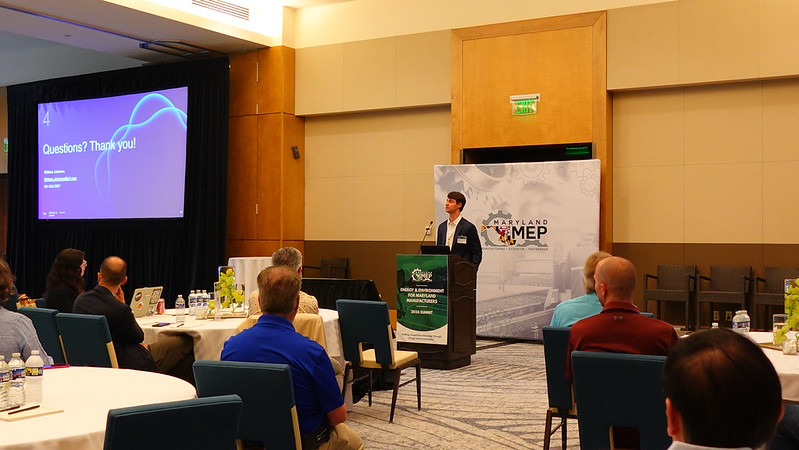
William Johnson, Sr. Energy Efficiency Account Manager at ICF, turned the focus to available funding. His goal for manufacturers: reduce risk and cost while improving ROI. He centered his session on Empower Maryland, the statewide incentive program established in 2008. His core message: “It’s about doing more with less.” Importantly, incentives account for production growth, so expanding companies remain eligible.
The figures made the case. A product warehouse earned a $468,128 BGE incentive and $107,677 in annual cost savings. A new construction project headquarters secured a $459,156 Pepco incentive and 1.6 million kWh saved per year. Amick Farms captured a $693,000 Delmarva Power incentive and 2.9 million kWh in annual savings. Johnson’s advice: engage early to determine eligibility for stacked incentives. As he put it, “Maryland is a bullet train to net zero.”
Navigating Rising Energy Costs
Richard Anderson, COO at CQI Associates, addressed the question on every manufacturer’s mind: why do energy costs keep climbing? He explained that rising costs predate recent headlines, driven by global conflict, legislation, and the absence of long-term energy policy. PJM regulatory capacity and transmission rate increases have added $0.03–$0.04 per kWh to supply costs.
He also debunked common misconceptions: that AI is the primary driver, that oil prices directly impact electricity costs, or that manufacturers can’t control their expenses. His action plan: take advantage of Empower Maryland rebates, prioritize kW demand management, and factor energy costs into long-term planning. His closing line resonated: “The chaos will continue—but remember you are in control. You can’t manage what you don’t measure.”
From Data to Decisions: Soupergirl's AI Transformation
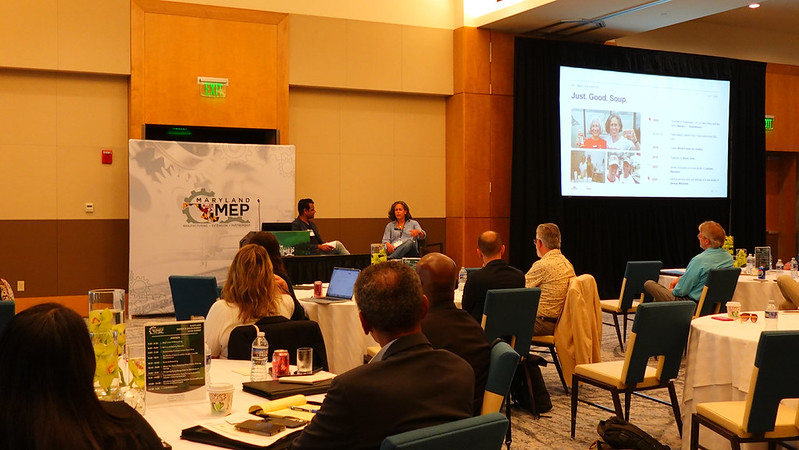
The summit’s final session showcased what’s possible for smaller manufacturers. Sara Polon, Co-Founder & CEO of Soupergirl, and Krishna Matturi, Co-Founder & Head of Product at Ampere, told a story of rapid, data-enabled growth.
Soupergirl has grown 3x—from 27 to 85 employees across two facilities. In the early days, energy was an afterthought. A bottleneck in the chilling process limited growth until the e2m2 program stepped in with 90% subsidized support. The result: funding secured for two new projects and AI tools now reducing energy overages. Matturi described Ampere’s technology as “built for factories, not a chatbot,” translating real-time energy data into actionable decisions. Polon’s reflection captured the day’s spirit: “Very grateful for the unlocked growth.”
Your Next Step
The 3rd Annual Maryland Manufacturing Energy Summit proved a single point across every session: measurable efficiency drives measurable profitability. Whether you operate a 1.5-million-square-foot plant or a two-facility food business, the path forward is the same: measure, prioritize, and tap available support.
As one panelist noted, “There’s a lot of funding out there. It’s about finding it and connecting—like we are here today.”
Ready to turn insight into impact?
Connect with Maryland MEP through the e2m2 Program to schedule an audit, identify available incentives, and build your own roadmap to lower energy costs.