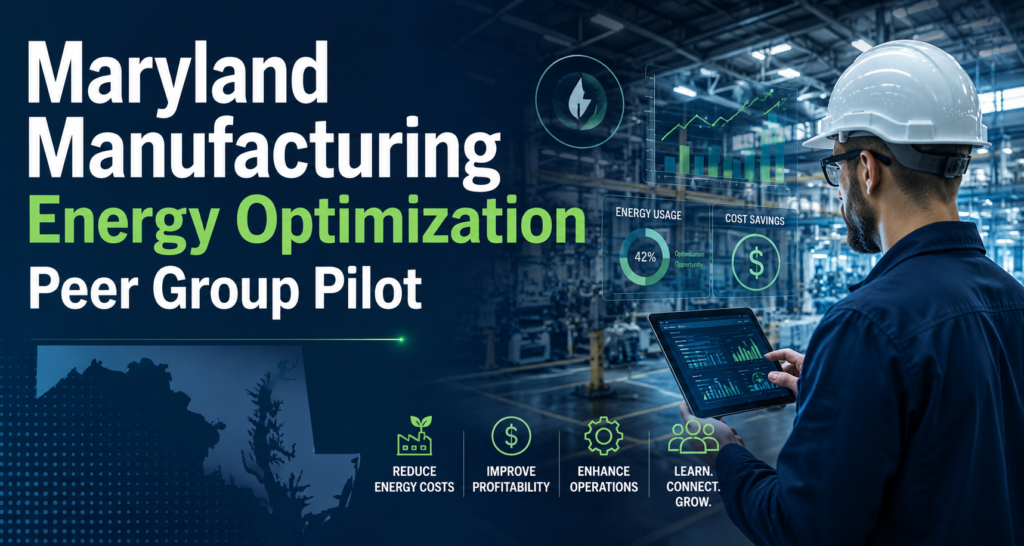
Maryland Manufacturing Energy Optimization Peer Group Pilot
Join the Maryland Manufacturing Energy Optimization Peer Group Pilot and become part of a forward-thinking network of manufacturers committed to reducing operational costs, improving energy performance, and leveraging data-driven insights to strengthen their businesses.
Why join the Manufacturing Manufacturing Energy Optimization Peer Group?
The Maryland Manufacturing Energy Cohort is a pilot peer-to-peer learning program designed specifically for Maryland manufacturers seeking practical ways to reduce energy costs, improve operational efficiency, and leverage AI-driven energy insights. Delivered in partnership between Maryland MEP and Ampere, this selective cohort combines hands-on energy analysis, peer learning, facility benchmarking, and strategic capital planning into a structured three-session experience. Participants will gain direct access to Ampere’s energy intelligence platform, receive an ASHRAE Level I+ Energy Audit Report, and collaborate alongside fellow manufacturing leaders facing similar operational challenges. The cohort is designed to help manufacturers move from understanding their utility data to identifying actionable savings opportunities and building long-term energy investment strategies. Ideal participants include CEOs, COOs, Operations Leaders, Plant Managers, Facility Managers, and Continuous Improvement leaders from small and mid-sized manufacturing companies interested in reducing operational costs and improving energy performance.
Marichi Platform Subscription
Manufacturers will receive a one-year subscription to Ampere’s Marichi platform, an AI-powered operational intelligence tool designed to help manufacturers identify energy-saving opportunities, improve operational efficiency, and uncover available funding and incentive programs. Marichi analyzes facility and utility data to provide actionable insights that support cost reduction, electrification planning, and long-term sustainability goals. The Marichi platform helps organizations identify energy efficiency and operational improvement opportunities, analyze facility energy usage and performance trends, discover available grants, incentives, and funding opportunities, develop a roadmap for reducing energy costs and improving competitiveness, and access AI-driven recommendations tailored to their specific operations.
Scheduled Meetings & Topics
Session 1 – Understanding Your Energy Profile & Facility Baseline
July 29, 2026, 9:00-11:00am, @ Maryland MEP in Columbia, Maryland
The session will introduce the cohort and peer learning model, provide an overview of utility bills, energy cost structures, electric rate schedules, and tariffs, and explore key energy benchmarking concepts. Participants will also be onboarded to the platform through a live Ampere demonstration, review equipment inventory and operational data collection requirements, and learn how to prepare facility information for deeper analysis in future sessions. By the end of the session, manufacturers will understand the composition of their utility bill at a deeper level, know their current utility rate schedule and available alternatives, receive and activate the Ampere platform credentials, complete initial onboarding into the Ampere platform, and submit facility equipment inventory and operational data for analysis.
Session 2 – Data Insights, Energy Savings & Operational Opportunities
August 25, 2026, 9:00-11:30AM, Virtual ZOOM Session
Participants will review their facility’s live energy data to identify operational cost drivers and uncover actionable savings opportunities. The session will focus on analyzing facility-specific energy performance, understanding tariff positioning and utility cost optimization strategies, identifying equipment that contributes most significantly to energy costs, and evaluating peak demand patterns and operational trends. Participants will also be introduced to methods for identifying and prioritizing improvement opportunities while engaging in peer discussions to share facility insights, early findings, and operational best practices. By the end of the session, each manufacturer will receive a documented opportunity brief within one week, and benefit from the experiences and perspectives of peer manufacturers facing similar operational challenges.
Session 3 — Capital Planning, Incentives & Long-Term Energy Strategy
September 29, 2026, 9:00AM-1:00PM, Location TBD
Participants will translate their energy findings into actionable project plans and long-term operational strategies. The session will include a review of ASHRAE Level I+ Energy Audit findings, guidance on building a 12-month energy and capital improvement roadmap, and methods for prioritizing projects based on return on investment and operational impact. Participants will also explore available utility incentives, rebates, grants, and financing pathways, while learning how continuous monitoring and optimization strategies can support sustained performance improvements. The session will conclude with implementation planning discussions and peer sharing of key takeaways and priorities.
Space is limited for this pilot cohort — register today to secure your company’s participation and begin identifying practical opportunities to reduce costs, improve efficiency, and strengthen long-term operational performance.
Peer Group Details
DATE & TIME:
- Begins July 29, 2026
- Meetings will be held both virtually and in person. Locations are to be determined.
CAPACITY:
- Registration is limited to 25 manufacturing companies
- Maryland Manufacturers Only
COST:
The cost of the pilot is based on the facility size and complexity.
- $9,000 (< 20K sqft)
- $11,000 (20K – 40K sqft)
- $15,000 (40K – 80K sqft)
The market rate range for the peer group facilitation, level 1 energy audit and 12 month subscription to the energy tool is $17,800-$32,200.
CONTACT:
For more information about the Pilot Peer Group, please contact:
Sara Keith
I am so happy to be a part of the Maryland Manufacturing HR Peer group! We discuss the happenings in our organizations and that’s how we learn from each other. We are there to support each other, and there is always something to learn. Maryland MEP does a great job with having guest presentations every time we meet! I am happy to be a part of such an amazing group of HR professionals!
Maryland manufacturers
Maryland MEP Energy Programs
Maryland MEP has made funding available for Maryland manufacturers to assist with a portion of the cost to participate. To be eligible, your organization must be registered with Dun and Bradstreet and have a valid manufacturing NAICS code, and have a physical location in Maryland. Eligible manufacturers may participate in the pilot cohort at the reduced costs reflected during registration.